The One Decision Experienced Operators Don’t Wait to Make
Why building flexibility into supply chain and storage planning matters more than reacting to disruption when it hits.
There’s a belief that quietly runs underneath most operational decisions, even in organizations that plan carefully: if something changes, we’ll find a way to handle it when it happens.
Few people would ever say it out loud, but it shapes the way countless supply chains respond to change. Nobody puts it in a strategy deck. It shows up instead as a kind of confidence, the sense that the operation has always managed before, so it will manage again. A project can slip a week and nobody panics because there’s an assumption sitting quietly underneath the calm: something will be available when the time comes. A customer can push a delivery date, a rail rate can shift, a warehouse can fill faster than expected, and the operation absorbs it the way it always has.
Most of the time, it’s true, and that’s exactly why almost nobody questions it. It isn’t a belief people arrive at through analysis. It’s a belief they arrive at through experience, because in the vast majority of cases, something has indeed been available when it was needed. The assumption isn’t irrational. It’s simply incomplete, in a way that only becomes visible on the days it doesn’t hold.
The condition isn’t really the decision
Take a project that slips five days. Nobody scrambles. The equipment can wait somewhere. The freight can sit a little longer. The operation has absorbed delays like this before, and it will again. At first, this one doesn’t feel any different from the last dozen.
You’ve probably seen what happens next: five days later, the depot that would have been the obvious choice is already committed to someone else. The nearby options are full, farther away than expected, or quietly more expensive than they would have been a month earlier, because the rail storage clock has been running the whole time the project sat waiting. The operation still finds an answer. It almost always does. What changes is the shape of the answer. It’s rarely the one anyone would have chosen a month earlier, before the field narrowed to whatever happened to remain available by the time someone finally needed it.
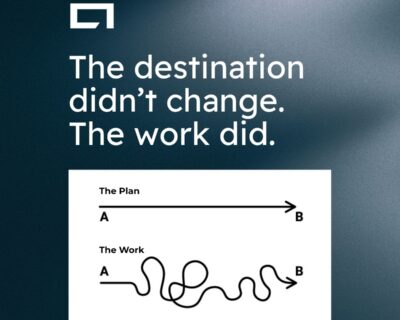
It’s worth noticing what didn’t go wrong. Nobody missed a deadline internally. Nobody made an obviously bad decision. The project slipped for reasons that had nothing to do with the operation: a permit, a customer, an upstream delay that nobody controlled. Every decision made along the way was reasonable based on what was known at the time, which is exactly what makes this pattern so easy to miss. There isn’t a single moment that looks like a mistake. There is only a gradual narrowing of available choices while everyone assumes there’s still time to decide later.
The delay itself wasn’t the problem. Delays happen every day, and no plan survives contact with a schedule that refuses to cooperate. That’s simply the nature of moving freight through a network shaped by customers, weather, labor availability, and countless other variables no single organization controls. What changed wasn’t the disruption. It was the number of good choices still available by the time someone had to act, and that’s a different way of looking at what actually happened. The delay didn’t cost the operation. The lack of a good choice already in place did, and those are two very different problems that call for two very different responses.
Where good decisions actually come from
It’s tempting to think the difference between operations that navigate disruption well and those that don’t comes down to performance under pressure: quicker thinking, sharper instincts, calmer heads in a crisis. There’s some truth to that. Experience does help people make better decisions when conditions shift without warning.
But after watching this pattern play out across terminals, depots, and every kind of freight in between, we’ve come to believe the real difference usually isn’t visible in the moment of pressure at all. It was decided weeks earlier, when nobody was under pressure to decide anything.
The operations that keep good choices available aren’t improvising better answers when disruption arrives. They’re the ones that already had relationships with depot partners before capacity tightened, so the phone call is a conversation with someone who already understands the operation instead of a cold negotiation with whoever happens to have room left. They’re the ones that explored alternative storage arrangements before the warehouse filled, so “the yard is full” isn’t a dead end but another branch of a plan they had already considered. They’re the ones that understood what a transportation partner could flex into, because those conversations happened months earlier, during ordinary weeks, when there was time to think instead of simply react.
By the time disruption arrives, those operations aren’t discovering their options. They’re choosing among options they deliberately created while there was still room to be selective, which is an underrated difference. A decision made when there are five good choices available looks very different from a decision made when only one remains, even if both accomplish the same immediate objective.
This is the quiet flaw in “we’ll find a way when it happens.” It isn’t wrong. The operation almost always finds an answer. The flaw is that finding an answer and choosing the best answer are not the same thing.
Preparation isn’t just about improving the next forecast. It’s about protecting the quality of the decisions you’ll eventually have to make after the plan changes, because those decisions become harder every time another good option quietly disappears.
Storage becomes part of the larger strategy
The real shift happens when storage stops being viewed as a transaction and starts being used strategically to preserve future options.
Storage certainly gives freight somewhere to wait, but after enough years around operations it becomes obvious that something else is happening at the same time.
A delayed project doesn’t simply need somewhere for equipment to sit. It needs a solution that allows tomorrow’s work to continue without creating unnecessary handling, unnecessary transportation, or unnecessary cost somewhere else in the network. A warehouse that’s temporarily full isn’t looking for more square footage for its own sake. It’s looking for a way to keep inbound freight moving until capacity catches up without creating congestion that will take days to unwind. A shipper facing rising rail storage costs isn’t trying to create another move. They’re trying to avoid being forced into an expensive decision because every other practical alternative has disappeared.
Those situations look different on the surface. One begins with construction delays. Another starts with warehouse constraints. A third is driven by changing transportation economics. Operationally, though, they’re all asking the same question: how do we protect tomorrow’s operation from becoming more difficult than today’s?
That’s why experienced operators rarely think about capacity as space alone. Over time, they begin thinking about the decisions that capacity protects. Sometimes that means planned depot capacity. Other times it’s wheeled storage that keeps equipment immediately accessible. In some situations it’s drayage, maintenance, container solutions, or another operational adjustment that relieves pressure somewhere else in the network.
Better planning isn’t enough
The specific solution changes because every operation is different, but the thinking behind those decisions is remarkably consistent. The objective isn’t simply finding somewhere to put freight. It’s preserving enough flexibility that, when conditions inevitably change, the operation still has several good choices instead of one expensive one. That’s a subtle distinction, but it’s one that changes the way experienced operators think about capacity. They aren’t simply creating room for freight. They’re protecting the quality of the decisions they’ll have to make later.
Forecasting, scheduling, and visibility all matter because they improve the quality of planning. Every operation benefits from understanding what’s likely to happen next, and every experienced operator would rather begin with a good plan than a poor one.
Eventually, though, every operation reaches the point where the forecast no longer matches reality. A customer changes plans, a project slips, weather interrupts transportation, or a warehouse fills sooner than expected. At that moment, the conversation shifts. The operation is no longer asking whether yesterday’s forecast was accurate enough. It’s asking what good choices remain now that today’s conditions are different.
Preparation is no longer measured only by the quality of the forecast. It’s measured by whether the operation still has good decisions available after the forecast turns out to be wrong. Those aren’t competing ideas. Better planning remains valuable, but experienced organizations understand that planning alone isn’t enough if the operation has no practical alternatives once conditions begin to change.
The organizations that consistently perform well aren’t succeeding because uncertainty somehow passes them by. They work in the same markets, with the same customers, the same weather, and many of the same constraints as everyone else. Over time they’ve simply stopped treating uncertainty as an interruption to normal operations and started treating it as one of the conditions every operation must be designed to absorb.
That’s why the day flexibility is needed is almost always the worst day to start looking for it. By then, the operation will almost certainly find an answer. Experienced operators usually do. The better question is whether it will still be the answer you would have chosen if you’d created more choices while there was still time to be selective.
Looking back over decades of terminal and depot operations, that’s one of the lessons that continues to surface. The strongest organizations aren’t necessarily the ones that predict disruption more accurately than everyone else. More often, they’re the ones that quietly prepare for it by creating good choices before they know exactly which one they’ll need. When conditions inevitably change, they aren’t inventing solutions under pressure. They’re choosing among possibilities they put in place long before the pressure arrived.