The Cost of Waiting Isn’t Always Downtime
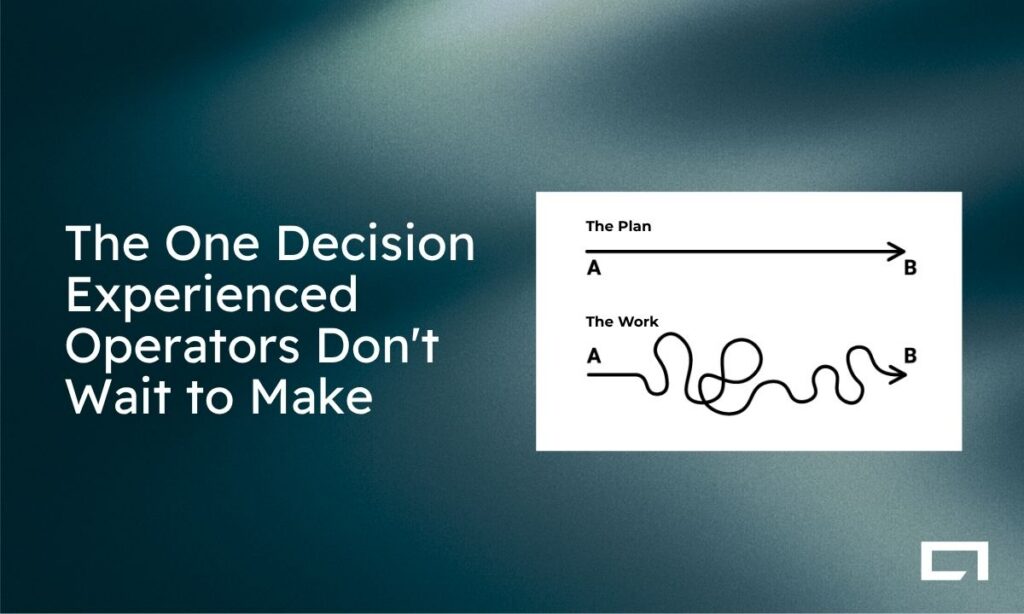
A shipment arrives before the site is ready for it.
The freight did exactly what it was supposed to do. The project didn’t.
Maybe permits took longer than expected. Maybe a customer pushed delivery back another week. Maybe warehouse capacity tightened unexpectedly. Whatever the reason, something that was scheduled to keep moving suddenly has nowhere to go.
Now there’s a decision to make.
Where should it wait?
At first glance, waiting doesn’t seem particularly expensive. If an asset isn’t moving, it isn’t consuming fuel. Labor isn’t actively working it. Compared to transportation costs or equipment utilization, a few extra days on the calendar can feel relatively insignificant.
Experienced operators know that’s rarely the full story.
The delay itself is rarely the biggest cost. It’s everything the operation begins doing because of it.
The trailer occupying today’s space was expected to leave yesterday. The container scheduled to move this afternoon now has to be staged somewhere else. Equipment that should have gone directly to its next destination is repositioned because another priority has taken its place.
None of those adjustments are unusual. They’re part of operating in an environment where plans change every day.
The challenge is that operations don’t experience those adjustments one at a time.
They experience all of them together.
One additional move may not matter. Twenty additional moves spread across a busy week begin consuming labor, equipment, space, and attention that were never part of the original plan. By the time the operation catches up, the delay itself may already be over, but the work created because of that delay continues long afterward.
That’s why experienced operators pay as much attention to the secondary effects of disruption as they do to the disruption itself.
Every operation waits. The best ones decide where.
Supply chains have always dealt with uncertainty. Projects pause. Customers change schedules. Weather interrupts carefully planned deliveries. Freight arrives before the next step in the network is ready.
None of that is new.
What’s changed is the environment operators are managing.
Over the last several years, supply chains have become far less forgiving. Global disruptions, changing trade patterns, tighter labor markets, and increasing pressure on asset utilization have reduced the margin for error. At the same time, better visibility has made it easier to understand the true cost of operational decisions that once disappeared into the rhythm of daily work.
Waiting didn’t suddenly become expensive.
The cost of waiting became much easier to see.
That distinction matters because it changes how experienced operators approach the problem. Rather than asking how quickly something can move, they’re increasingly asking where it should wait so the rest of the operation can continue flowing with as little disruption as possible.
Flexibility is easier to build than it is to buy.
For years, storage was often treated as a reaction.
Peak season arrived. Spot rates climbed. The yard filled. Only then did organizations begin searching for additional capacity.
That approach made sense when disruption was less frequent and capacity was easier to secure.
Today’s operating environment rewards a different mindset.
One pattern we’ve observed across industries is that experienced operators increasingly think about temporary staging as part of network design rather than emergency overflow. The objective isn’t to hold inventory longer than necessary. It’s to create enough flexibility that one part of the operation can pause without forcing every other part of the network to react.
Consider a retailer preparing for peak season. Inventory may arrive weeks before warehouse capacity is available to receive it. Moving everything immediately into the distribution center doesn’t necessarily improve the operation. In many cases, it simply transfers congestion from one part of the network to another. Instead, retailers may intentionally stage inbound inventory until distribution capacity is available, allowing product to move when the operation is actually ready, not simply when the shipment arrives.
The same principle applies whether the asset is a container, trailer, finished vehicle, construction equipment, or industrial material.
The asset changes, but the operational challenge rarely does. One part of the network becomes ready before the next one is. The operations that adapt best don’t eliminate that reality. They build enough flexibility into the operation that one delay doesn’t force every other part of the network to adapt around it.
Experience doesn’t eliminate uncertainty. It changes how you respond to it.
Every operation eventually encounters disruption.
No amount of planning changes that.
What experience changes is the response.
Storage is rarely the objective. Like visibility, staging, maintenance, or sequencing, it is one operational lever inside a much larger strategy. Sometimes it is exactly the right answer. Sometimes a different adjustment creates a better outcome. The value isn’t choosing storage first. It’s understanding what problem the operation is actually trying to solve before deciding which operational lever to pull.
That’s one of the lessons that experience teaches over time.
The goal isn’t to eliminate waiting.
It’s to prevent waiting from creating unnecessary work everywhere else.
Because operations don’t become resilient by avoiding uncertainty.
They become resilient by creating enough flexibility to keep the rest of the network moving while timing catches up somewhere else.